Menu
May 13, 2026
The government's ban on combustible cladding on new high-rise buildings, which came into force in December 2018, was a landmark moment. Long overdue, and broadly welcomed across the construction and engineering sector, it signaled a turning point in how building safety would be treated in the wake of the Grenfell Tower tragedy.
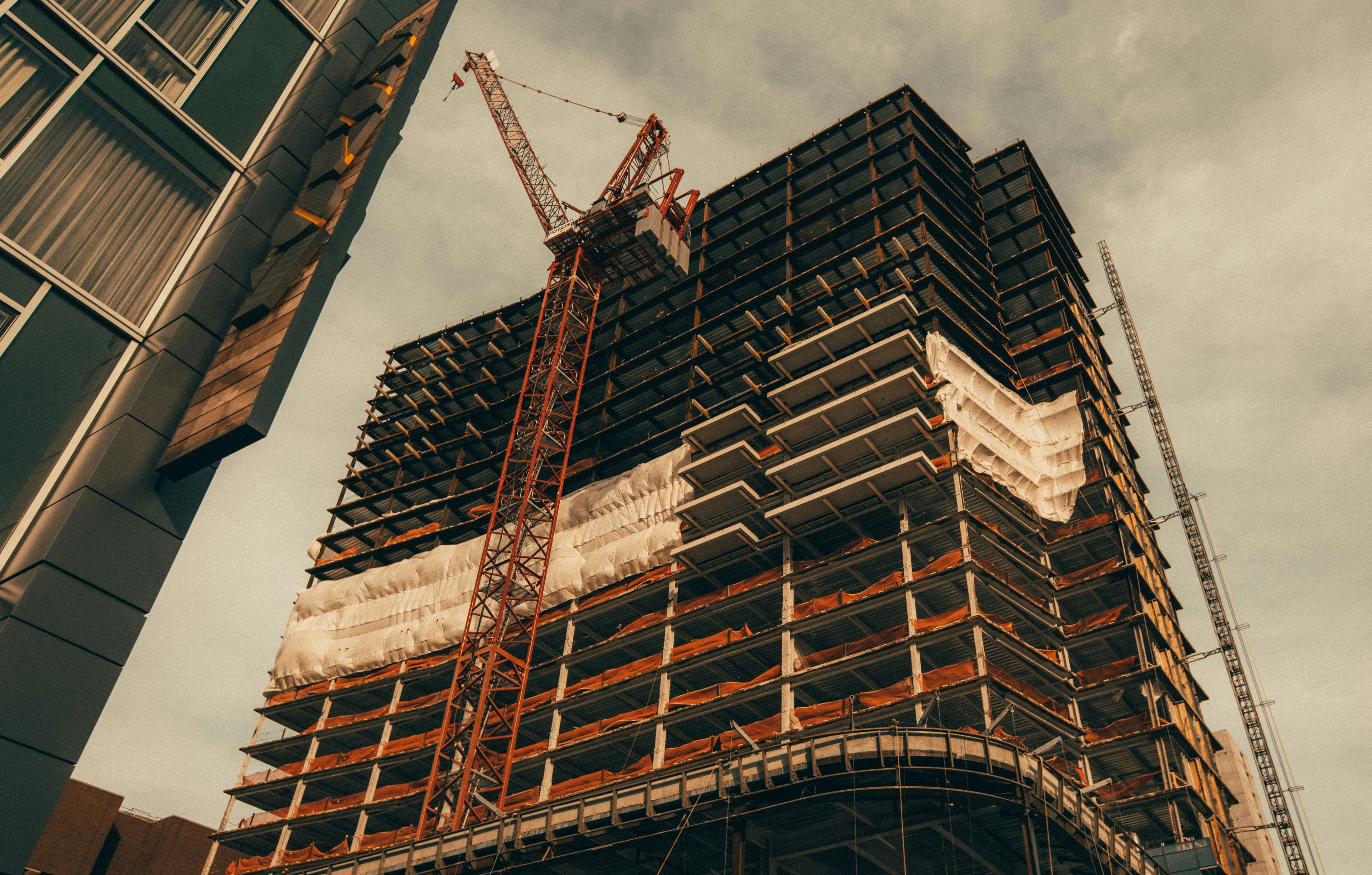
But for many professionals working at the coalface of structural and civil engineering, the relief was tempered by a harder truth: the damage from years of unclear regulation had already been done.
Chris Farrow, Director of Farrow Walsh - a design-led structural and civil engineering consultancy with deep expertise in high-rise residential and commercial construction - was among those who welcomed the government's subsequent move to clarify its position, but was clear-eyed about its limitations.
"This clarity is welcome, but we have already seen the impact of the previously unclear regulations," Farrow told The Times in a feature on the future of construction. "The broad-brush approach taken to the materials used on high-rise developments is compounded by insurance companies increasing premiums for consultants working on buildings over a certain number of storeys. The implications of this on the cost of projects, and to firms seeking to secure insurance on materials, is having a significant impact on small and medium-sized construction and engineering businesses."
It's a comment that cuts to the heart of a systemic problem. When regulatory guidance is vague, it doesn't just create uncertainty - it creates a commercial ripple effect. Insurers reprice risk conservatively. Consultants absorb higher operating costs. Project budgets inflate. And ultimately, it is the smaller, independent practices - often the most innovative and specialised - that feel the squeeze most acutely.
Farrow Walsh operates precisely in this space: bringing considered, design-integrated structural thinking to complex projects, where the interface between architecture, engineering and compliance is anything but straightforward. It is this vantage point that gives Chris Farrow a particularly grounded perspective on how regulatory ambiguity translates into lived professional consequence.
Yet the picture is not without cause for optimism. Farrow Walsh is also keen to acknowledge the positive shift in how buildings are being scrutinised since Grenfell - one that goes well beyond the visible surface of a facade.
Post-Grenfell, he notes, there has been a marked increase in scrutiny placed on both residential and commercial tower blocks - not just in the materials that can be seen, but in the critical, often invisible, elements that underpin a building's fire safety performance. Chief among these are airtightness and thermal insulation: components that rarely feature in public discourse around building safety, but which are fundamental to how fire and smoke behave within a structure.
For a practice like Farrow Walsh, where structural integrity and design intelligence are treated as inseparable, this shift in focus is both welcome and overdue. It reinforces what experienced engineers have long understood: that fire safety is not a cladding problem alone. It is a whole-building problem, demanding whole-building thinking.
As the industry continues to navigate the post-Grenfell regulatory landscape - with the Building Safety Act now reshaping the framework for higher-risk buildings - the voices that matter most are those with the technical depth to understand what the regulations mean in practice, and the professional standing to speak plainly about where they fall short.
Chris Farrow and the team at Farrow Walsh are among them.
Farrow Walsh is a design-led structural and civil engineering consultancy.
To find out more about our work and expertise, get in touch.